
 Spanish
 English
 Italian
 Portuguese
 French
Welcome to Our Blog - ITG Group
Blog

- Innovation
- Oct 19, 2026
Buying Second-Hand Machinery Shouldn't Be a Gamble: Introducing ITG Machinery
Buying second-hand machinery should be a smart way to grow. For many mills, it feels more like a bet.
The logic behind it is sound: a second-hand loom or warping machine can bring capacity online faster, with a smaller investment than new equipment. What holds most buyers back isn't the price. It's the question a typical listing never answers: what condition will this machine actually be in when it reaches my factory?
The real problem with the second-hand market
The second-hand machinery market isn't short on offers. It's short on accountability.
A listing tells you the brand, the model, maybe the year. It rarely tells you how the machine was running before it came off the line, whether anyone has checked it since, or who you call if it doesn't perform once it's installed. In many deals, the seller's involvement ends at the transaction, and every risk after that is yours: parts nobody warned you about, a start-up that takes longer than planned, capacity you budgeted for that never shows up.
For a factory owner, that's capital tied up in uncertainty. For a purchasing manager, it's a supplier decision that's hard to defend if it goes wrong. In both cases, the machine itself is rarely the whole problem. The missing backing is.
What changes with ITG Machinery
ITG Machinery is ITG Group's department dedicated to second-hand machinery. It manages the selection and commercialisation of second-hand equipment from start to finish, and the word that matters most there is selection.
Every piece of equipment is evaluated against specific criteria of quality, operation and reliability. Our technical and commercial team assesses each option before it's offered, and each machine is thoroughly inspected so it arrives ready for your production line.
That changes the question you're asking. Instead of “what am I actually getting?”, it becomes “which of these fits my production?”, and you answer it with people who have already looked at the machine.
The platform covers machinery from leading brands such as Picanol, Toyota, Vamatex, Itema, Dornier, Sulzer and many others. Behind it is the same group you may already know from spare parts and new machinery: decades in the textile industry and a distribution network in more than 50 countries.
That's what we mean by second-hand machinery, first-class backing.
The people behind the backing
Backing isn't a policy. It's the people who answer when you have a question.
ITG Machinery is led by Fabio Giamminola, General Director of ITG Brasil, who brings the group's commercial and technical experience to every selection. Alongside him, Vania and Arissa run the administrative and commercial side of the process. They're the team you'll be speaking with from your first inquiry until the offer reaches you.
This matters more than it might seem. When you buy secon-hand equipment, you're not only buying a machine. You're trusting someone's judgement about it, and knowing who that someone is, and being able to reach them, is part of the backing.
How to get started
Everything happens directly on the platform, in three ways:
Buy from the listing. Start by browsing the machines currently available. If you find the reference you're interested in, send your interest request through the platform, and the negotiation starts from there.
Request a search. If the machine you need isn't on the listing, you don't have to stop there. Submit a search request: register your company and describe the machinery you're looking for. The ITG Machinery team will then help you find it.
Sell your machinery. Machinery your mill no longer uses can still be valuable to another one. Register it through the sales form, upload its details and photos, and submit it for publication on the platform, where it can reach thousands of potential buyers in the textile industry worldwide.
Buying second-hand shouldn't mean buying blind
Take a look at the current offer on the ITG Machinery platform, or write to us at itg.machinery@group-itg.com. Tell us what your line needs, and we'll tell you whether we have the right machine for it.
- Innovation
- May 18, 2026
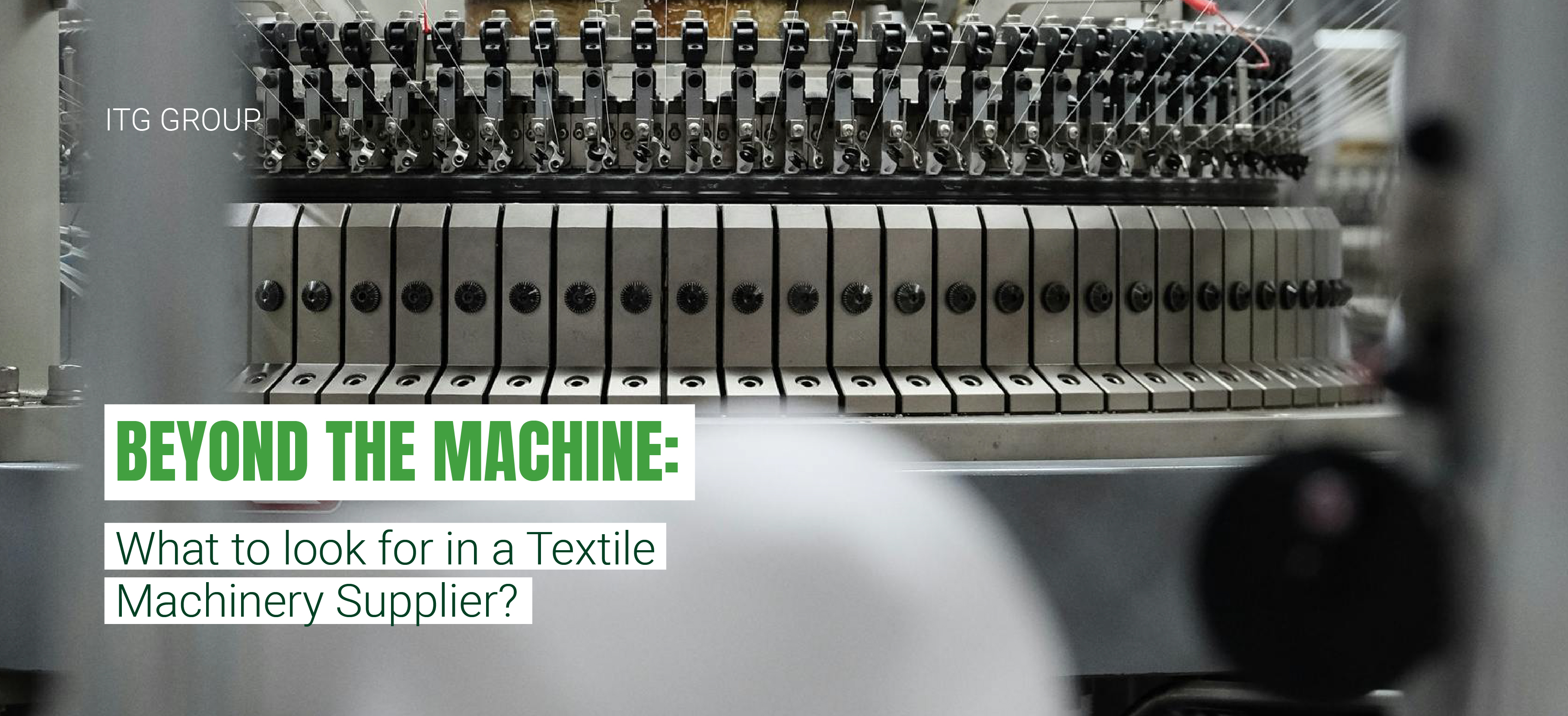
Beyond the Machine: What to Look for in a Textile Machinery Supplier
Finding the right textile machinery supplier is one of the most strategic decisions a plant owner or production manager will make.
In textile manufacturing, the performance of your machinery is only as strong as the supplier behind it. Whether you are scaling production, upgrading equipment, or entering new markets, working with the right textile machinery supplier directly shapes your results. Here are the five factors every production manager and purchasing manager should evaluate before making a decision.
1. Technical Expertise Across Textile Processes
A qualified textile machinery supplier should understand not only the equipment, but also the specific processes it supports. From weaving and braiding to finishing and cutting, every operation has distinct requirements. The right partner goes beyond selling machinery — they help you select the correct configuration based on your production goals, materials, and target markets.
Look for suppliers with engineers or specialists who speak the language of your production floor, not just the sales catalog.
2. Responsive After-Sales Support and Technical Assistance
Downtime in textile manufacturing is costly. For plant owners and production managers, a supplier's responsiveness after the sale matters as much as the machine itself. A strong after-sales service means fast access to trained technicians, remote troubleshooting, and on-site assistance when critical issues arise.
"In high-speed or continuous production environments, every hour of unplanned downtime translates directly to lost output. Your supplier should be reachable — and capable — when it matters most."
Evaluate the supplier's average response time, the size of their technical team, and whether they have service presence in your region before committing.
3. Spare Parts Availability and Supply Chain Reliability
Even the best textile machinery requires maintenance and part replacement. A supplier with a reliable spare parts supply chain ensures you avoid prolonged production stops caused by unavailable components. Key criteria to assess include parts compatibility with major machine brands, inventory depth, and delivery lead times.
Suppliers that maintain strategic stock of critical components and offer cross-brand compatibility provide significant continuity advantages — especially in global or multi-brand production environments
4. Integrated Product Range and Line Optimization Capability
The best textile machinery suppliers offer more than standalone equipment. Suppliers that complement their machines with accessories, finishing components, and production line solutions add measurable value by enabling a more integrated and optimized workflow. This reduces the complexity of managing multiple vendor relationships and creates a more cohesive production setup.
When evaluating a supplier, consider whether their portfolio can serve your current needs and scale with future expansion plans.
5. Proven Industry Experience and International Track Record
Experience matters in textile machinery. A supplier with a long track record, international presence, and established industry partnerships is better positioned to deliver consistent, reliable results over time. Their accumulated knowledge reduces implementation risk and provides access to industry best practices that a newer entrant simply cannot match.
Why Textile Manufacturers Choose ITG Group
ITG Group brings together over 50 years of industry experience, a global commercial presence, and a comprehensive portfolio that covers textile machinery, spare parts, accessories, and expert consulting. With a team of specialists dedicated to each phase of the production process, ITG does not just supply equipment — it helps manufacturers optimize their entire operation.
From initial equipment selection to ongoing technical support, ITG Group operates as a long-term partner for production managers and plant owners who demand reliability, responsiveness, and results.
Choosing the right textile machinery supplier is one of the most consequential decisions a production manager or plant owner will make. Technical capability, service quality, and long-term partnership commitment should all be weighted equally — because the supplier you choose will be part of every production shift that follows.
- Innovation
- Apr 23, 2026
The Role of Heald and Dropper's Thickness in Weaving Performance
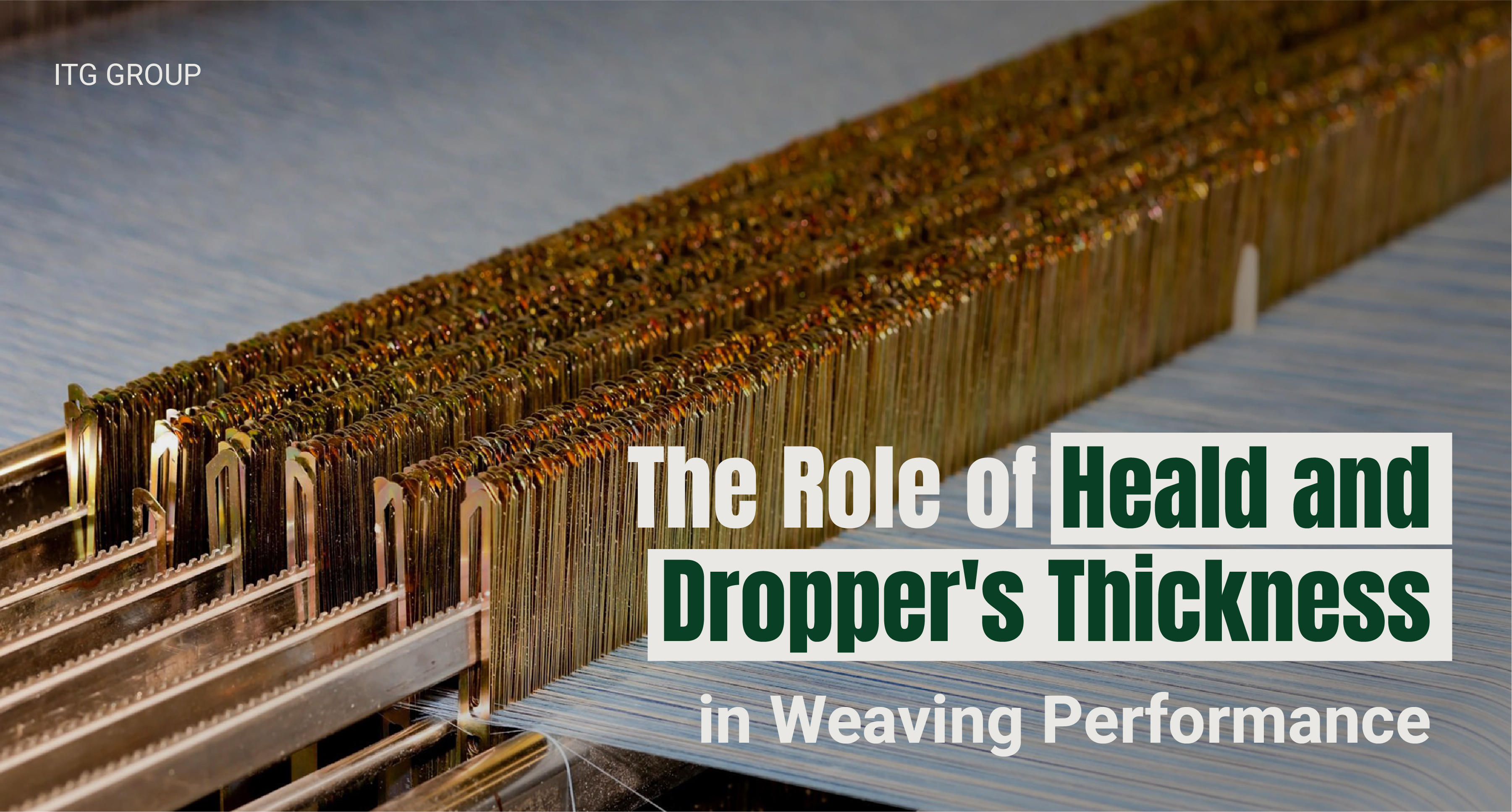
In weaving, precision is not only defined by machines, but by the smallest components guiding every yarn. Among them, healds and droppers play a critical role in controlling yarn movement, tension, and break detection. One often overlooked factor in their performance is thickness—both in the mail-eye (eyelet) and in the overall lamella structure.
The thickness of a heald directly influences how the yarn interacts with the loom. A thinner mail-eye reduces friction, allowing smoother yarn passage and minimizing filament damage. This is especially important when working with fine or delicate yarns, where excessive friction can lead to breaks, irregularities, or quality defects.
Conversely, thicker healds provide greater mechanical strength and stability. This is essential in high-speed weaving or when processing coarser yarns, where components are exposed to higher tension and continuous mechanical stress. In practice, thickness can vary significantly—ranging from approximately 0.2 mm to 0.8 mm depending on the application, enabling manufacturers to adapt to different production conditions .
Droppers follow a similar principle. Their thickness directly impacts the sensitivity of warp stop motion systems. Thinner droppers can react faster to yarn breakage, improving detection accuracy and reducing fabric defects. Meanwhile, thicker droppers offer increased durability in demanding environments where resistance to wear is critical.
Surface quality also plays a key role. Smooth, abrasion-resistant eyelets reduce yarn damage and help maintain consistent fabric quality over long production runs. Combined with the right thickness, this ensures an optimal balance between performance and durability.
Ultimately, selecting the correct thickness is not a minor technical detail—it is a strategic decision. It affects loom efficiency, yarn integrity, maintenance frequency, and final fabric quality.
For manufacturers looking to optimize their weaving processes, understanding these variables is essential. This is where working with specialized partners and high-quality components becomes a key advantage.
- Innovation
- Jan 08, 2026
Cooling Fabrics: The Textile Response to a Hotter World
As global temperatures rise and heat waves intensify, the textile industry is rapidly evolving to meet a new reality: thermal comfort is no longer optional. This has brought cooling fabrics — textiles engineered to regulate temperature, wick moisture, and dissipate heat — into mainstream demand. What was once exclusive to performance sportswear has now expanded into everyday fashion, workwear, and even medical textiles.
According to leading market research, the global cooling fabrics market was expected to reach US$ 3.59 billion in 2025, driven by the need for breathable, temperature-regulating textiles in hotter climates. Projections indicate that the market could grow to US$ 3.67 billion by 2030, maintaining a steady growth of around 7–8%, supported by climate adaptation, innovation in materials, and shifting consumer expectations.
Why Cooling Fabrics Are Rising
• Climate pressure: Rising global temperatures and urban heat-islands make cooling textiles essential for comfort and safety.
• Active lifestyles: The boom in outdoor activity and fitness increases demand for breathable, quick-dry, moisture-managing garments.
• Beyond sports: Cooling fabrics are now widely used in everyday casualwear, uniforms, protective clothing, bedding, and healthcare applications — a sign of how broad the need has become.
How Cooling Fabrics Work
Cooling fabrics use a variety of advanced technologies:
• Moisture-wicking synthetics (polyester and nylon blends) that pull heat and sweat away from the skin.
• Phase-change materials (PCMs) — microcapsules that absorb, store, and release heat as temperature fluctuates.
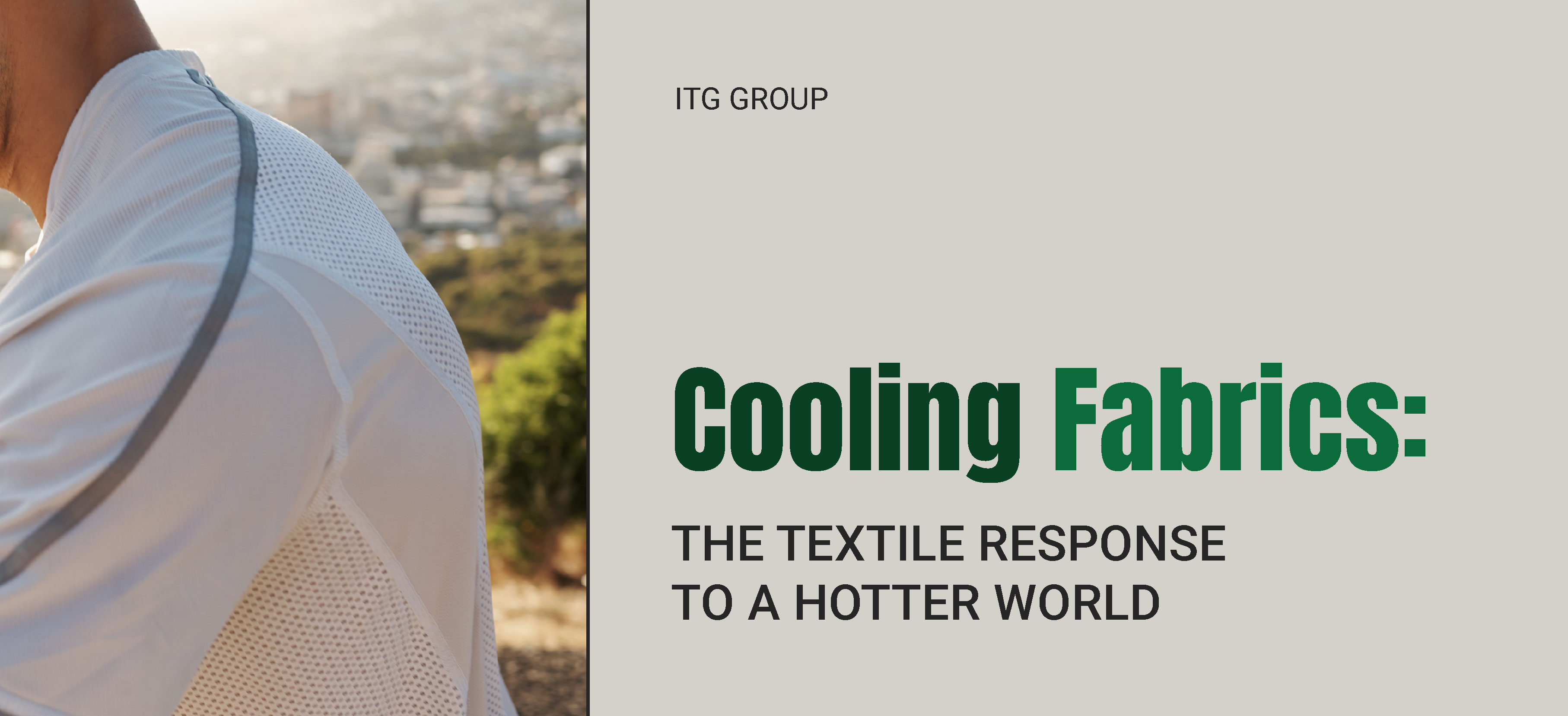
• Breathable knits, mesh structures, and cooling chemical finishes that enhance airflow and heat dissipation.
Where They’re Used Today
• Sportswear & athleisure: Still the largest application segment.
• Workwear: Especially in construction, industrial labor, and hospitality in hot regions.
• Casualwear & loungewear: Consumers want comfort that adapts to temperature.
• Medical & protective textiles: Helps reduce heat stress for patients and staff.
As cooling fabrics become a defining force in the textile landscape, staying informed is key for manufacturers looking to remain competitive. At ITG Group, we are committed to keeping our clients up to date on the latest shifts in materials, technology, and market demand — providing clarity for medium- and long-term decision-making. By understanding where the industry is headed, producers can better prepare, invest wisely, and adapt their operations to meet the expectations of a rapidly changing global market.