 Spanish
 English
 Italian
 Portuguese
 French
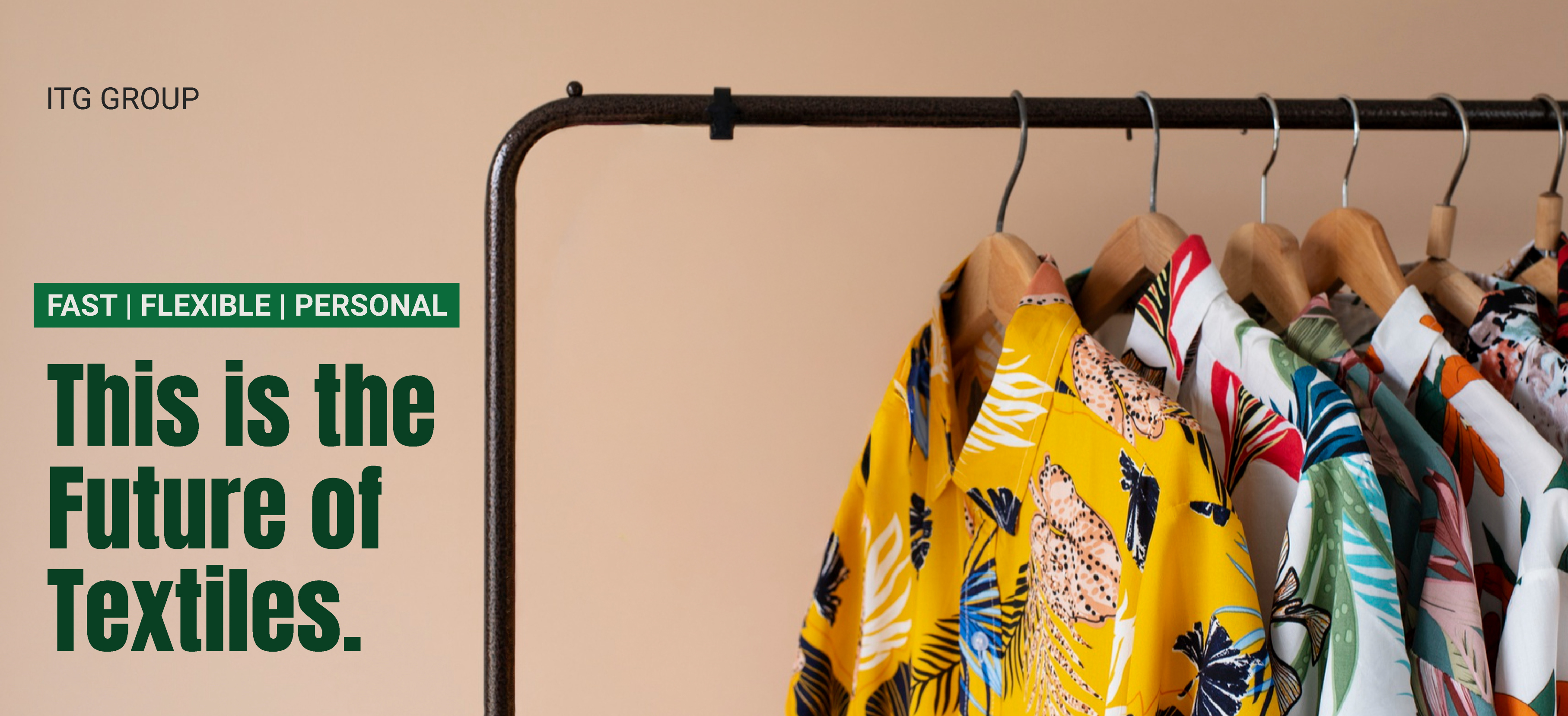
Welcome to Our Blog - Fast. Flexible. Personal. This is the Future of Textiles.
Fast. Flexible. Personal. This is the Future of Textiles.
- Innovation
- Dec 15, 2025
Fast. Flexible. Personal. This is the Future of Textiles.
In a world where consumers expect faster turnarounds and greater personalization, the textile industry is undergoing a profound shift toward modular, rapid production systems. No longer satisfied with off-the-rack assortments, many buyers now demand garments with custom fits, adjustable features and unique styles — and textile manufacturers are adapting accordingly.
At the heart of this transformation lies modular production architecture: machines, fabrication lines and design workflows built not for long-runs of one style, but for quick changeovers, multiple variants and mass-customization. Unlike traditional production that uses fixed processes, modular systems allow manufacturers to switch fabrics, colors, sizes and even structures with minimal downtime. Research on modular garment systems shows that a small set of “building blocks” (modules) can be recombined to create a wide range of styles, essentially enabling customization at scale.
Complementing modular design is rapid configuration — the ability to set up production machinery quickly, based on simulations or digital models rather than trial-and-error sampling. For example, the European research project MODSIMTEX developed systems to simulate textile structures and machine settings in advance, thereby reducing the time required to configure setups for new product variants.
Why are these changes critical? For one, today’s consumer doesn’t wait eight to twelve months for a new style. They expect updates seasonally (or micro-seasonally), customizations and quicker fulfillment. Modular and rapid systems reduce lead times and enable smaller lot sizes — matching demand for personalization while maintaining cost-effectiveness. Secondly, these systems support variety without cost explosion: by standardizing modules and digitizing configuration, manufacturers maintain efficiency while offering more variants. An academic study on production scheduling in personalized fashion goods showed that manufacturers who optimize for flexibility rather than just volume can deliver both customization and speed.
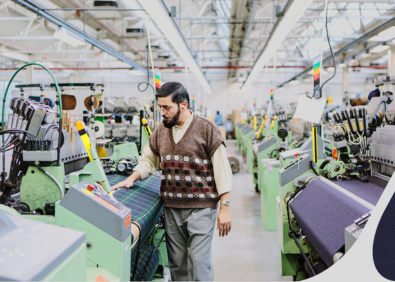
In practice, what does this look like on the factory floor? You’ll see a textile-machinery line with swappable cylinders, automated adjustments, and digital models that define machine settings in minutes. Teams move seamlessly between one style and the next. A garment may be assembled from modules — detachable sleeves, interchangeable panels or modular closures — reducing waste and enabling personalization without rebuilding the line for each variant.
For textile machinery manufacturers and suppliers like ITG Group, the implication is clear: the future of production lies not only in faster machines, but in machines built for flexibility, modularity and personalization. Supporting fabrics and garments that shift with consumer desires means supporting the entire value-chain of textile manufacturing in motion and those who adapt their machines, workflows and mindset to this shift will lead the next wave of textile innovation.
Source: arvix.org