 Spanish
 English
 Italian
 Portuguese
 French
Welcome to Our Blog - Weft Feeders: The Component That Decides How Many Fabrics Your Loom Can Weave
Weft Feeders: The Component That Decides How Many Fabrics Your Loom Can Weave
- Textile industry
- Nov 10, 2026
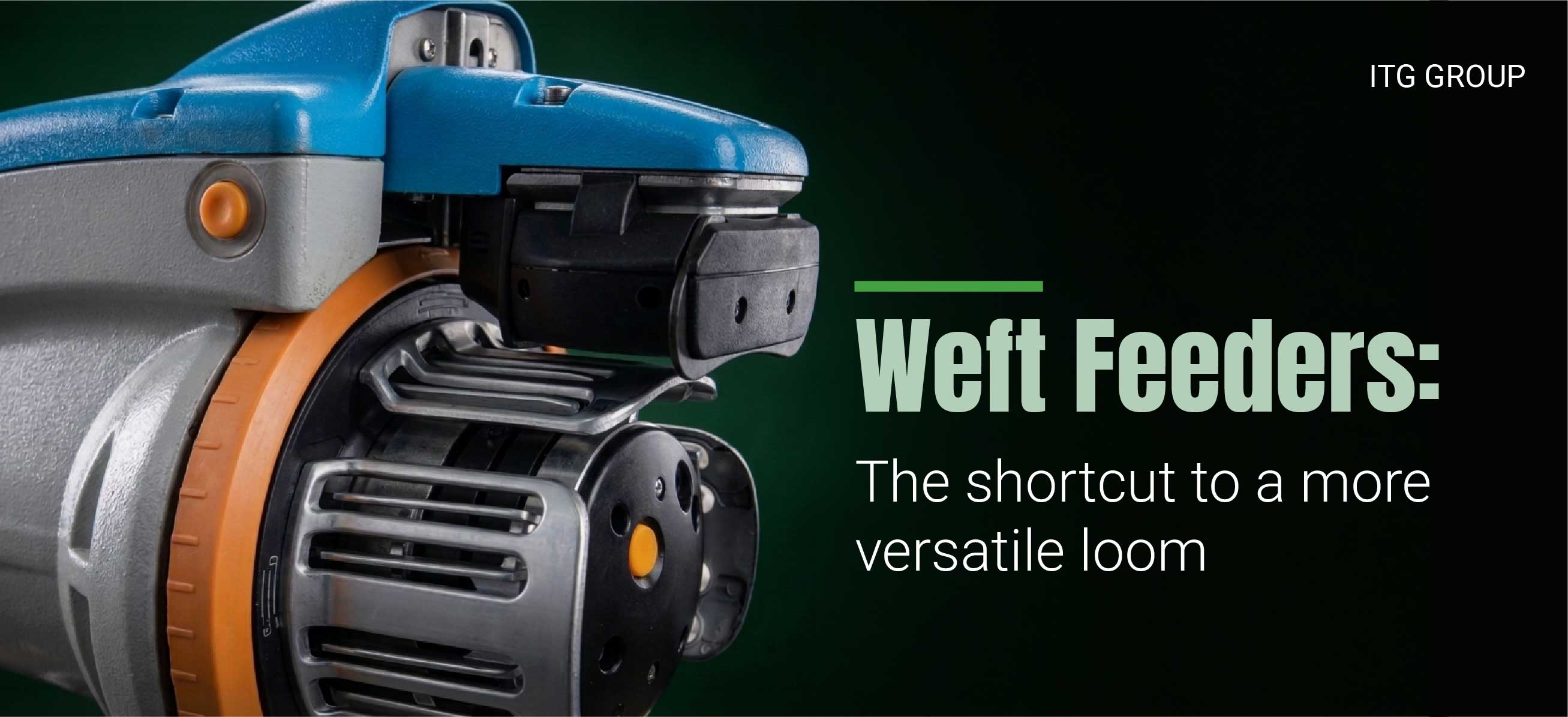
Weft Feeders: The Component That Decides How Many Fabrics Your Loom Can Weave
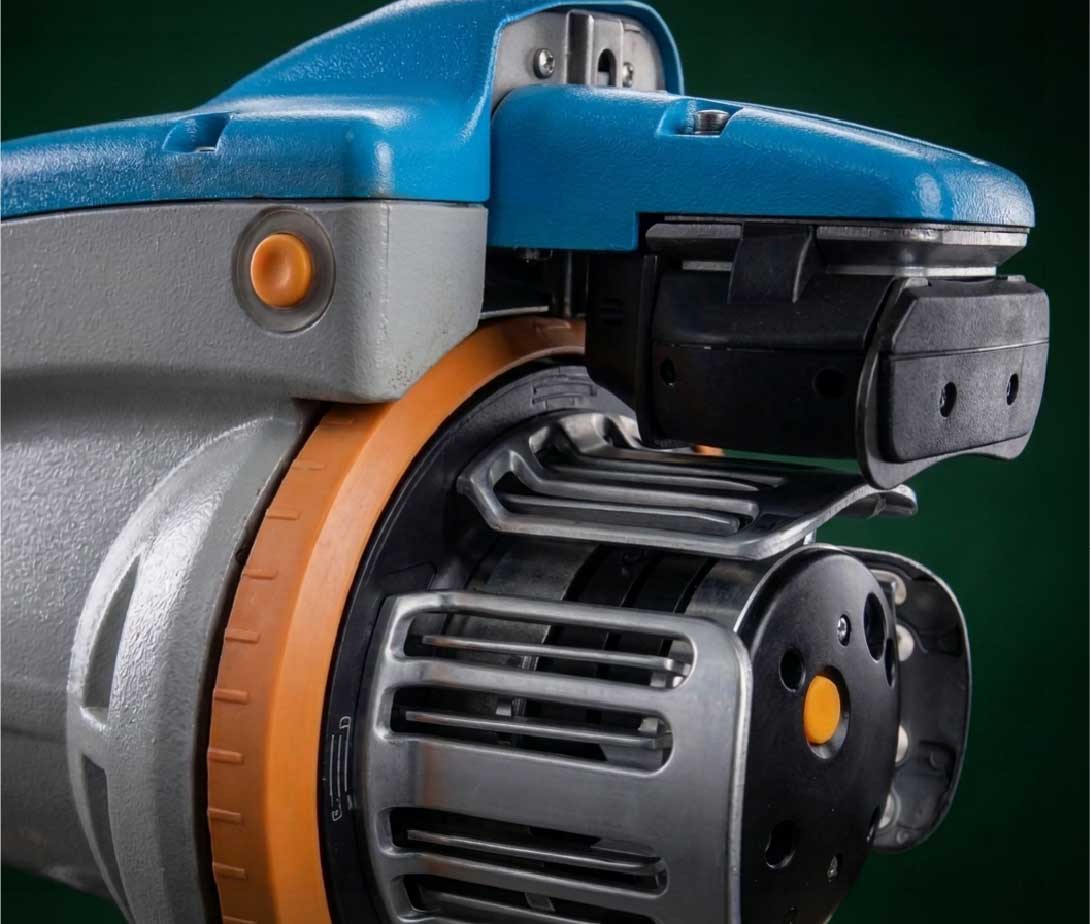
A loom is only as versatile as what feeds it. When a mill wants to weave something new, the first conversation is usually about looms. A new article, a new market, a design with more colours: it sounds like a machinery decision. But in many cases the limit isn't the loom. It's the weft feeder in front of it, which decides which yarns the loom can run, how many colours it can insert and how fast it can switch from one article to the next.
This article looks at the weft feeder from that angle: not as a part that keeps the loom running, but as the part that decides how much the loom can do.
Versatility in yarn: one feeder, many articles
The first thing a feeder sets is the range of yarns a loom can take. The wider that range, the more articles one loom can carry without changing equipment.
Our weft feeder and measurer for jet looms runs yarns from 20 denier to 3.5 Ne, at weft feeding speeds up to 1800 m/min.
The SHG-135A covers 22 to 5000 dtex, with yarn separation adjustable up to 4 mm.
The TS-612G2 and TS-613G2 series are built for uniform weft tension across a wide range of counts, on all kinds of rapier and projectile looms.
What makes that range usable day to day is how quickly the feeder adapts when the article changes. Winding direction is set to S or Z according to the yarn's twist. The separation between coils on the drum is adjustable. On the TS series, the S/Z interval is continuously adjustable. Changing article means changing settings, not changing the feeder.
Versatility in colour: from one weft to several
This is where a feeder changes what a loom can sell.
A loom that inserts a single colour is limited to the fabrics a single colour allows. Our insert systems take that limit away on the loom you already have:
WIS-2WH upgrades a single-colour water-jet loom to a 2-colour pick-at-will loom.
WIS-3WH takes a single-colour water-jet loom to 3 colours pick-at-will.
FDP with our control system upgrades a single air-jet loom to 2 colours pick-at-will.
SH-RL is a roller insert system for 2 colours pick-at-will on water-jet looms, for yarns from 20 to 600 denier.
SWIS-6/8A runs 6 or 8 feeders on air-jet looms, with colour selection controlled by the loom.
On the water-jet systems, the pattern can be controlled by the dobby, which addresses pattern synchronisation at the root. The result, in the catalogue's own words: the weaving range of the loom is enlarged, and higher-value products can be woven.
For a mill, that's the difference between buying new looms to enter a new type of fabric and adding that capability to the looms already on the floor.
Versatility across the floor: one range for every insertion technology
Most mills don't run a single loom technology. A floor might have rapier looms on one line, air-jet on another and water-jet on a third, each with its own feeder requirements. Our range covers all of them:
Rapier and projectile: TS-612G2 and TS-613G2, up to 1500 m/min, with automatic speed control and a weft-break stop function. The SH2000C3 is developed specifically for speed rapier looms.
Jet looms: our weft feeder and measurer, with photocell coil detection and weft-break detection that triggers either a loom stop or automatic weft changing.
Air-jet: the FDP, which can substitute Tsudakoma FDP feeders on looms up to 800 rpm, and the SWIS-6/8A system.
Water-jet: the WIS series, the SH-RL and the LHL-1W.
The feeders adapt to the electrical side, too. The FAC-1 works with a control box at AC 3-phase 90 V, the SH2000C3 with AC 3-phase 45 V, and the TS-612G2 electric boxes cover standard voltage ranges, with customised boxes for the voltages outside them.
For the person who buys and maintains them, one supplier for every technology on the floor means one conversation, one catalogue and one source for parts.
Versatility that pays for itself
Expanding what a loom can weave usually comes with a cost question. On the water-jet insert systems, part of that cost comes back in operation:
No blast motor. The WIS systems no longer need the blast motor for measuring length on a mechanical feeder, which saves electrical power and reduces maintenance costs, since the feeder is easier to replace.
Less weft waste. Weft length is adjusted through the diameter of the storage drum and the number of release turns, so weft waste can be avoided.
And where a full multi-colour upgrade isn't the goal, the LHL-1W combines mechanical measurement with electronic control, needs no blower, and suits looms up to 800 rpm and widths from 1.25 to 2.8 m.
Keeping versatility under control
A feeder that can do more also has more settings to get right. Every time you change article, colour configuration or yarn, check these:
Count range. Your finest and your heaviest yarn both have to fall inside the model's range.
S or Z. Winding direction follows the yarn's twist. A new yarn can mean a new setting.
Separation. Set the gap between coils for the yarn you're running now, not the setting left over from the last article.
Break response. Confirm whether the setup is configured for a loom stop or automatic weft changing.
Parts on hand. We supply wool rings, front and rear tensioners, elastic drums, sensors, compensators, main boards and electric boxes. When a feeder stops, the fastest fix is usually a part, not a new unit.
Before you buy another loom
If the plan is to weave more yarns, more colours or more articles, it's worth asking first what the looms you already have could do with a different feeder or insert system. Sometimes the answer is a new loom. Often it isn't.
Tell us your looms, your yarns and the fabrics you'd like to weave next, and our team will help you work out what the feeder can open up: info@group-itg.com